
Defending Overloads in the Final Third
Part 3: Timed Release
By: Matt Carroll
This session is the third in my team’s summer session folder. In New Jersey, we have an open period where any team can hold sessions. With multisport athletes, summer tournaments, and our participation in a summer league, we try to keep it to one session a week. We have to plan to not have all of our squad, and a fairly mixed group of freshmen, JV, and varsity-level players. Taking this into account, we tend to try things out and introduce topics that, once the season starts, we can revisit and refine. This session, we are working on overloads, but specifically in the final third, so players are really focused on creating the lowest percentage shot possible, covering their angles, and making sure to delay the attack long enough for players to get back and help on defense.
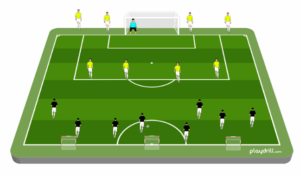
For this next drill, we are taking the 10 Ball Drill, which is purposely disjointed, and creating a more fluid drill with the same concepts but in an increasingly game like atmosphere. The drill starts with 8 attackers and 4 defenders, plus a goalkeeper defending a large goal on one side of the field. The defenders will attack three small pug goals placed at the half. In addition, the defenders will have 4 players who will be lined up behind the goal.
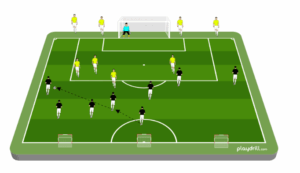
Initially on the field, the defenders are down 8 to 4, so their attacking options are going to be limited. We want to talk about how and when we can attack, when to possess, and when to clear the ball to a lower percentage area of the field. We also have a heavy focus on delay here, as the attacking team’s passes will be counted, and every 10 passes they make, the defenders are able to add an additional player from their pool to the field. With this dynamic, we have an attacking team that is looking to be more direct and trying to find those penetrating passes to secure their numeric advantage naturally through the setup of the drill. Defensively, we are creating the opportunity for the defense to set up in a way that denies these and delays the forward progress of the opponents. In addition, it makes it difficult for the attacking team to score early and sit back; they need to keep being forward-minded or the additional numbers from the defending side mean they have a numerical advantage with the goalkeeper and three attacking options towards goal.
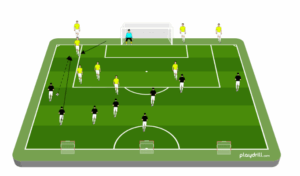
Next, we continue to make the session more game-like and add an aspect of back pressing that we first visited in the first drill in this season.

