3 Pass 3 3rds Drill
By: Matt Carroll
Recently, my team has been struggling with looking to make vertical passes, whether they are there or not. Too often, we have looked to break a line with the defense in a solid defensive position, skip the midfield and play forward into a marked attacker, or just end up running our attackers ragged by playing through ball after through ball. We worked to create the 3 Pass 3 3rds Drill to combat that and create the image in the players' heads of how connecting passes at any part of the field opens up the defense to attack forward.
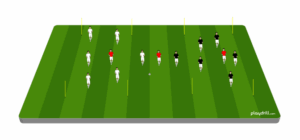
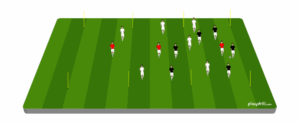
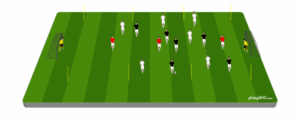
The drill starts with a 30x40 grid that is split into thirds by coaching sticks on the sideline. The grid size can be adjusted according to field availability or the numbers you are looking to inject into the field, but we generally are looking at a 5v5. In each grid, place a neutral that can play only inside the third they are placed in. At each end is either a pug goal, a small-sided goal with a goalie, or a full-sized goal with a goalie. The goalies will be added later on during that progression of the drill. The teams then line up in whatever formation they want, but they can move fluidly between each grid with no restrictions on how many players can enter the three grids. While non-directional to start, it should be explained that when they set up their formation, one grid should represent the defensive third, one the midfield, and the far side being the attacking third.
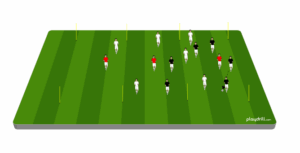
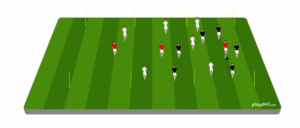
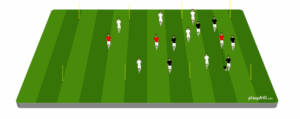
Play starts with one team receiving the ball and the other team pressing them. The team on the ball scores by connecting three passes in any of the grids. They cannot stack points in the same grid, so if an attacking team scores in their defensive third by connecting three passes, they then must either move to the midfield or attacking third and connect three passes in that grid to score. If they lose possession and then regain it that count starts over again. Passes to neutrals count towards the three passes.
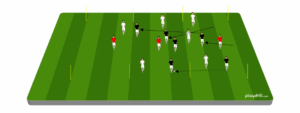
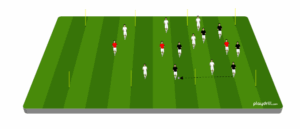
The keys to this game are width and depth, and monitoring the numbers you commit to any grid. The attacking team wants to consistently maintain a numerical advantage, which the neutral helps with, but the idea is not to stay in any single grid for a particularly long time, so you want players who are then able to support the next grid. In addition, with the size of the grid dropping, too many players in one grid by the team in possession means defenders will follow, and it will likely create an excess of players in that grid. In addition, progressing out of a grid becomes important because you are then looking to continuously be moving and maintaining your overloads.
From there the goals and goalies are added, the passing restrictions are removed, but the lines and the neutrals remain the same. In this way we are attempting to remove the passing restraints from the game but retain the visual aspects of the drill, but placing it in a more game like north/south environment to better prepare the players to apply the skills to the full sided game.