
Defending Overloads in the Final Third
Part 1: 2v1+1
By: Matt Carroll
This session is the third in my team’s summer session folder. In New Jersey, we have an open period where any team can hold sessions. With multisport athletes, summer tournaments, and our participation in a summer league, we try to keep it to one session a week. We have to plan to not have all of our squad, and a fairly mixed group of freshmen, JV, and varsity-level players. Taking this into account, we tend to try things out and introduce topics that, once the season starts, we can revisit and refine. This session, we are working on overloads, but specifically in the final third, so players are really focused on creating the lowest percentage shot possible, covering their angles, and making sure to delay the attack long enough for players to get back and help on defense.
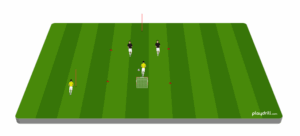
The first drill we will work on in this session is a 2v1+1 that we will then transition to a 2+2v1+1 as we progress. The drill starts with a 20x20 box with a pug goal on the defender's side. The two attacking players begin on the opposite side of the goal, and the defender on the goal side has a ball. Offset about 5 yards to either side of the box is an additional defender. 20 feet behind the attacking players is a coaching stick in line with the pug goal.
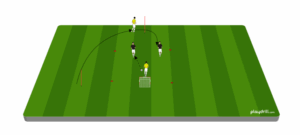
The drill starts with the defender playing a ball to the attackers and the attackers then attempting to score against the defender into the pug goal. As soon as the ball is played the defender offset from the grid begins to sprint around the stick 20 feet from the attackers side. As soon as they round the stick they then can enter into the grid and begin to defend.
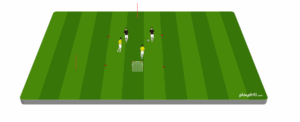
From here, we run the same drill, possibly expanding the grid to 30x30, but definitely adding a second stick between the original stick and the grid. This time, when the ball is passed, there are two attacking players offset from the grid that run around the shorter stick and can enter the grid, and there is still the one defender, so we are now looking to still be getting into a better defensive position, but still we are at a numerical disadvantage. The numbers from this can be adjusted accordingly to make the game easier or more difficult, such as starting the game off as a 3v2 with one offset runner on each team.
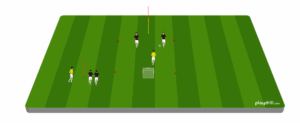
The coaching focus here is going to be tracking back for the offset player and recognizing where they need to get to to help the defender in the box. For the defender in the box, we want them to delay play and force the attacking team to make a number of sideways and negative passes that allow for their help to enter the grid. The defender is focusing on their angles, not allowing an easy shot on goal, and making sure the passes they do give up don’t give the attacker many opportunities for quick or one-time shots.

