
Serve and Return Drill
By: Matt Carroll
One issue I found with my team this year was that we struggled against counters from teams that played long over the top. We would commit numbers forward, and then when the team inevitably skipped the midfield and went long, our individual defending was found wanting, and we were able to be countered. We designed this drill, in addition to a modified version of it called Serve/Build/Return, to work on defending the long ball, and then defending the long ball to then attack.
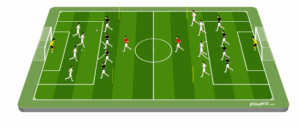
The drill starts with three grids and goals at either end of each of the far grids. The central grid is “no man's land” and is only occupied by two central players. Each team then sets up their attackers in one grid and defenders in another, and vice versa, so one team’s attackers are lined up against another team’s defenders. We did 4v4s since the team on the ball will have a neutral, so it will create an overload, but you can vary the numbers based on your formations and what you are trying to achieve. Add goalkeepers in each large net at each end.
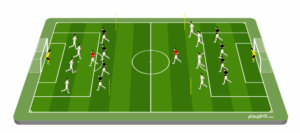
The game starts with a coach, placed into “no man's land,” playing long ball over the top of no man's land to an attacking team. As soon as the ball enters a grid, one of the neutral players can enter that grid and aid the team on the ball, simulating a late trailing player moving from defense to attack. The attacking team attempts to score on net. The defending team attempts to win the ball and then play a ball that goes over “no man's land” and enters into the opposite grid to their team so they can attack. If the ball fails to clear the grid (since we are trying to get the defense to simulate the opposition playing more direct), the coach plays a floated ball back into the grid into the attacking team, who gets to restart their attack. Play continues for a set period of time, and the winner is the team that scores the most goals.
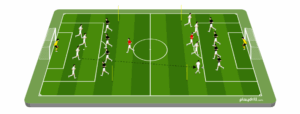
Some notes from running this drill: you want to make sure that “No Man’s Land” is long enough that it simulates the long ball being played over the top, but short enough that players can accurately and consistently play the balls over it.

